
What Travel Can Feel Like When You Have ADHD, Autism, or Both
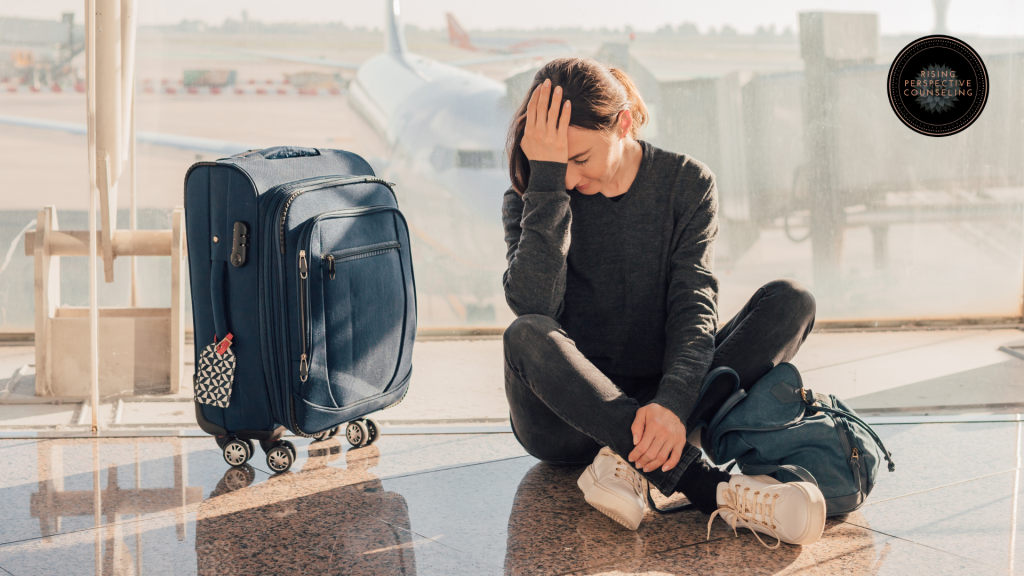
There’s a particular experience that comes up frequently for ADHD and AuDHD adults around family travel. The trip is planned. People are excited. The destination is somewhere meaningful, maybe a place with real cultural or personal significance, maybe just a long-awaited vacation. And alongside the genuine anticipation, there’s something else. A low hum of dread. Anxiety about packing. The sense that the social and sensory demands ahead are going to cost more than anyone around you seems to realize.
This experience can carry a lot of shame, especially for adults who haven’t yet connected their difficulty with travel to their neurology. If the people around me are excited and I’m already bracing, what does that say about me? It can feel like ingratitude, or rigidity, or a failure to just relax and enjoy things.
What it actually often reflects is a nervous system that processes sensory input, transitions, and social demand differently, and that can find the specific combination of inputs that travel involves genuinely taxing, even when the destination is somewhere that matters.
The Executive Function Load of Getting There
Travel begins long before departure, and for many ADHD brains, the planning and preparation phase can be its own significant challenge. Packing requires holding a mental model of multiple days, multiple contexts, and multiple people’s needs simultaneously… a working memory and task-organization demand that can be especially difficult for ADHD executive function.
Packing anxiety (the specific dread of knowing you need to pack, being unable to start, and then catastrophizing about what you’ll forget ) is common enough among ADHD adults that it comes up in clinical conversations regularly. It’s not a quirk or a personality trait. It’s the intersection of task initiation difficulty, working memory demands, and the high stakes that travel can assign to forgetting things.
For AuDHD adults, the preparation phase may also involve anticipatory anxiety about sensory and social elements ahead: What will the noise levels be like? Will there be enough downtime? What happens if the schedule changes unexpectedly? This anticipatory processing can be exhausting in itself, beginning the trip’s cognitive load well before anyone has left the house.
What the Travel Day Can Feel Like Neurologically
Travel days involve a particular density of sensory and regulatory challenges. Airports and transportation hubs can be loud, unpredictably crowded, visually busy, and full of transitions (security lines, gate changes, delays) that are difficult to anticipate or control. For many autistic and AuDHD adults, environments with this level of sensory and social complexity can push the nervous system toward overwhelm in ways that aren’t always visible from the outside.
For ADHD brains specifically, the waiting that travel requires like long layovers, slow-moving lines, stretches of enforced stillness can be especially activating. The ADHD nervous system can struggle to regulate in understimulating environments, which is why a two-hour airport wait can feel more exhausting than the flight itself.
Add the sensory exposure of a full travel day such as the noise, the lighting, the unfamiliar smells, and the physical closeness of strangers. For some AuDHD adults, arrival at a destination can feel less like the beginning of rest and more like recovery from a very long nervous system test.
Family Travel and the Social Demand
What distinguishes family travel from solo travel, for many ADHD and AuDHD adults, is the sustained social demand. Traveling with family means extended time in shared spaces, fewer opportunities for solitude, less control over the schedule, and often more responsibility for managing other people’s emotional experience of the trip.
For autistic adults who may require significant alone time to regulate after social engagement, family travel can present a particular tension: the people and places you love most are the same people and places generating the input your nervous system is working hard to process. This is not ambivalence about the people. It is the nervous system doing its job under sustained load.
It can help to name this distinction clearly, both internally and when possible with travel companions: needing quiet after meaningful time together is not withdrawal, criticism, or a sign that the experience wasn’t valued. For some nervous systems, it is simply what recovery looks like.
When You Need to Come Home From the Thing Everyone Loved
One experience that can carry particular shame for AuDHD adults is the recovery period after travel aka the time after returning home when the nervous system needs to decompress from what can feel, neurologically, like a sustained high-load event.
For many people, coming home from a meaningful trip feels like a gentle reentry. For some ADHD and AuDHD adults, it can feel like a crash…a period of significant fatigue, sensory sensitivity, emotional reactivity, and difficulty returning to normal functioning that can last several days. This is sometimes called autistic burnout in clinical and community conversations, though its presentation varies widely between individuals.
If this is a pattern you recognize, it’s worth taking seriously rather than pushing through. The recovery period after sustained high-demand travel is not weakness or overdramatizing. For some nervous systems, it is a genuine physiological response to extended overload, and treating it accordingly (with rest, reduced demands, sensory recovery time) tends to shorten it rather than prolong it.
A Note on Cultural Travel and Meaningful Destinations
For many ADHD and AuDHD adults from communities with strong cultural identities, travel to places of personal or cultural significance adds another layer. The trip may be to a homeland, a family gathering, or a place with deep ancestral or community meaning. The desire to be fully present and to honor the significance of where you are and who you’re with can make the sensory and regulatory difficulty feel even more complicated.
It is worth saying plainly: finding a meaningful place hard to be in is not a failure to appreciate it. For some nervous systems, places with high sensory density, unfamiliar routines, or intense social engagement are genuinely harder to regulate in, regardless of how meaningful they are. The significance of a place and the sensory load of a place are two separate things. Both can be true at the same time.
What Can Make Travel More Manageable
For ADHD and AuDHD adults who travel regularly or are preparing for summer trips, a few considerations can reduce the regulatory load without removing the experience itself.
- Building recovery time into the itinerary (not as empty time, but as scheduled downtime) can allow the nervous system to reset between high-demand days rather than accumulating overload across the trip. This works better when it’s planned in advance rather than grabbed when things have already gone too far.
- For the preparation anxiety that many ADHD adults experience around packing, externalizing the process tends to help: a written packing list started several days before departure, broken into contexts (plane, daytime activities, evenings) rather than categories, can reduce the working memory demand of holding the whole trip in your head at once.
- And for AuDHD adults traveling with family, naming what you need in terms of recovery time before the trip begins, rather than trying to negotiate it in the middle of a full itinerary, tends to go better. It gives travel companions context and removes the shame of having to ask in the moment when you’re already depleted.
If travel consistently feels much harder for you than it seems to for people around you, and if that difficulty is affecting your relationships or your ability to be present for experiences that matter to you, that’s a conversation worth having with a clinician who understands neurodivergent nervous systems. Schedule a free consultation here!
If travel prep is one of the places task initiation breaks down for you, the free Task Initiation Worksheet can help. It’s designed specifically for the gap between knowing what you need to do and being able to start it.
Download the free Task Initiation Worksheet here.
Frequently Asked Questions
Why is packing so anxiety-inducing when you have ADHD?
Packing requires holding a mental model of multiple days, multiple contexts, and multiple people’s needs in working memory simultaneously, all while initiating a task that has no immediate deadline and significant consequences for forgetting things. For ADHD brains, this combination of working memory demand, task initiation difficulty, and high perceived stakes is a reliable recipe for avoidance and anxiety.
Is sensory overload during travel an autism thing or an ADHD thing?
Both. Sensory sensitivity and sensory processing differences can be associated with both ADHD and autism, though they can present differently. For autistic adults, sensory overload may involve specific sensory channels (sound, light, touch) becoming genuinely painful or overwhelming. For ADHD adults, the difficulty can be more about sensory dysregulation under high cognitive load: the nervous system becoming harder to manage when executive function is already stretched. For AuDHD adults, both can be present at the same time.
How do I explain to family that I need alone time during a trip without it seeming like I don’t want to be with them?
Framing it in neurological terms before the trip tends to go better than negotiating it in the moment when you’re already depleted. Something like: “I need some quiet time each day to stay regulated. It’s how my nervous system works, not a reflection of how much I want to be here.” Most people respond better to a clear, advance explanation than to withdrawal that appears to come from nowhere.
Why do I feel so exhausted after a trip I genuinely enjoyed?
Travel involves sustained sensory input, disrupted routine, social engagement, and reduced control over the environment, all of which can place significant load on ADHD and AuDHD nervous systems regardless of how enjoyable the experience was. The exhaustion afterward is the nervous system decompressing from that load. How much you enjoyed the trip and how much it cost your nervous system are two separate things.
Is there a way to make family travel genuinely easier, or is it always going to be this hard?
For many ADHD and AuDHD adults, travel gets significantly more manageable when it’s designed with their nervous system in mind rather than in spite of it. Building in recovery time, externalizing the preparation process, communicating needs in advance, and lowering the expectation that you should feel the same way about travel as neurotypical companions do can all reduce the load. It may never be effortless, but effortless was probably never the right benchmark.